<?xml version="1.0" encoding="utf-8" ?>
<rdf:RDF xmlns:rdf="http://www.w3.org/1999/02/22-rdf-syntax-ns#" xmlns:dc="http://purl.org/dc/elements/1.1/" xmlns:syn="http://purl.org/rss/1.0/modules/syndication/" xmlns="http://purl.org/rss/1.0/">


<channel rdf:about="http://grsf.no/newsroom/news/aggregator/RSS">
  <title>News</title>
  <link>http://grsf.no</link>

  <description>
    
      News from Global Relief Somali Foundation
    
  </description>


            <syn:updatePeriod>daily</syn:updatePeriod>
            <syn:updateFrequency>1</syn:updateFrequency>
            <syn:updateBase>2011-08-18T15:44:30Z</syn:updateBase>
        

  <image rdf:resource="http://grsf.no/logo.png"/>

  <items>
    <rdf:Seq>
      
        <rdf:li rdf:resource="http://grsf.no/newsroom/news/programme-2016"/>
      
      
        <rdf:li rdf:resource="http://grsf.no/newsroom/news/agenda-2016"/>
      
      
        <rdf:li rdf:resource="http://grsf.no/newsroom/news/Keynote_speaker"/>
      
      
        <rdf:li rdf:resource="http://grsf.no/newsroom/news/what-about-the-mentally-ill-people"/>
      
      
        <rdf:li rdf:resource="http://grsf.no/newsroom/news/coming-conference-sept-2012-1"/>
      
      
        <rdf:li rdf:resource="http://grsf.no/newsroom/news/somalia-the-real-causes-of-famine"/>
      
      
        <rdf:li rdf:resource="http://grsf.no/newsroom/news/a-charity-container-on-its-way-to-horn-of-africa"/>
      
      
        <rdf:li rdf:resource="http://grsf.no/newsroom/news/successful-conference"/>
      
    </rdf:Seq>
  </items>

</channel>


  <item rdf:about="http://grsf.no/newsroom/news/programme-2016">
    <title>Programme 2016:</title>
    <link>http://grsf.no/newsroom/news/programme-2016</link>
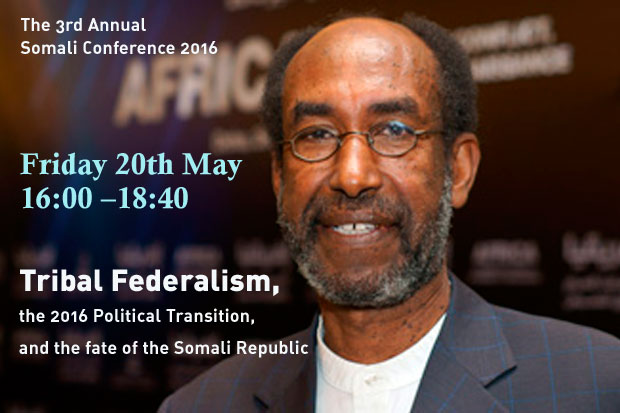
    <description>Tribal Federalism, the 2016 Political Transition, and the fate of the Somali Republic 
The 3rd Annual Somali Conference 2016
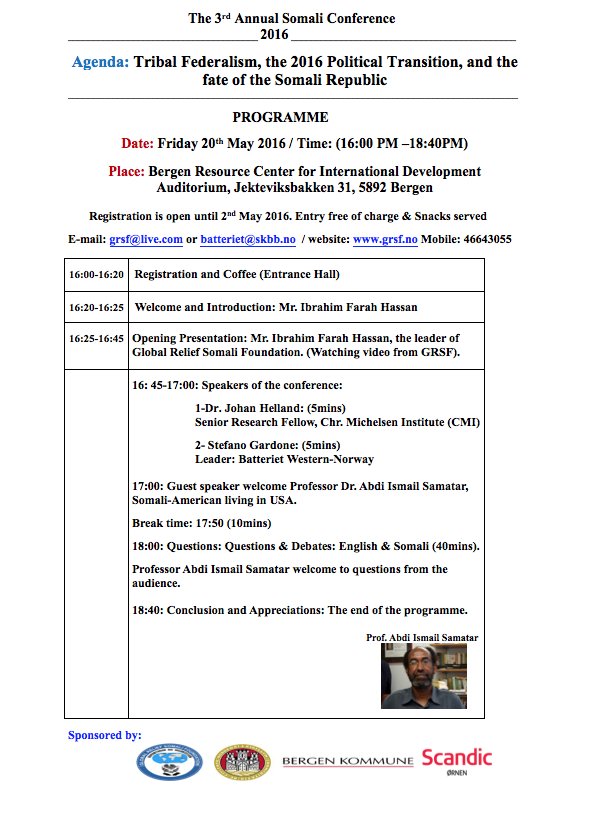
Agenda: Tribal Federalism, the 2016 Political Transition, and the fate of the Somali Republic

 </description>
    <content:encoded xmlns:content="http://purl.org/rss/1.0/modules/content/"><![CDATA[<p><a class="internal-link" href="../../English2016pdf.pdf">Last ned programmet her</a></p>
<p> </p>
<p><img class="image-inline" src="../../Skjermbilde20160218kl.13.26.18.png" /></p>]]></content:encoded>
    <dc:publisher>No publisher</dc:publisher>
    <dc:creator>admin</dc:creator>
    <dc:rights></dc:rights>
    <dc:date>2016-02-18T12:27:44Z</dc:date>
    <dc:type>News Item</dc:type>
  </item>


  <item rdf:about="http://grsf.no/newsroom/news/agenda-2016">
    <title>Agenda 2016:</title>
    <link>http://grsf.no/newsroom/news/agenda-2016</link>
    <description>Tribal Federalism, the 2016 Political Transition, and the fate of the Somali Republic</description>
    <content:encoded xmlns:content="http://purl.org/rss/1.0/modules/content/"><![CDATA[<p align="center"> </p>
<h3 style="text-align: left; "><strong>The 3<sup>rd</sup> Annual Somali Conference 2016</strong><span> </span></h3>
<p style="text-align: left; "><strong>Friday 20<sup>th</sup> May 2016 (16:00PM –18:40PM)</strong><strong><span> __________________________________________________________________________________</span></strong><strong> </strong></p>
<p style="text-align: left; "><strong><span> </span></strong></p>
<p style="text-align: left; "><strong>Place:</strong> <strong>Bergen Resource Center for International Development</strong></p>
<p style="text-align: left; ">Auditorium,<strong> </strong>Jekteviksbakken 31, 5892 Bergen</p>
<p align="center"> </p>
<p><strong> </strong></p>
<p><strong> Registration is open until 2<sup>nd</sup> May 2016.</strong></p>
<p><strong> </strong></p>
<p>E-mail: <a href="mailto:grsf@live.com">grsf@live.com</a> or <a href="mailto:batteriet@skbb.no">batteriet@skbb.no</a></p>
<p>Mobile: 46643055</p>
<p> </p>
<p> </p>
<p>On Behalf of the Global Relief Somali Foundation (organizing committee), it is our great honor and pleasure to cordially invite you to attend the 3<sup>rd</sup> Annual Somali Conference in Bergen 2016.</p>
<p>This year, the theme of the conference is “Tribal Federalism, the 2016 Political Transition, and the fate of the Somali Republic” and the conference will be held on Friday 20<sup>th</sup> May, 2016 at 16.00pm, at the<strong> </strong>Bergen Resource Center for International Development,<strong> Auditorium</strong> Jekteviksbakken 31, 5892 Bergen.</p>
<p> </p>
<p>The Global Relief Somali Foundation is a non-profit organization, non-religious and non-political organization. It was registered in Norway, on June 5<sup>th</sup>, 2010.</p>
<p>We are proud to offer a very exciting programme with focus on discussing the issues and challenges, in our local community and the political situation and Somali Diaspora in Europe and USA.</p>
<p> </p>
<p>For you information, Prof. Abdi Ismail Samatar is a Professor and Chair of Department of Geography, Environment and Society at the University of Minnesota and a Research fellow at the University of Pretoria. Prof. Abdi Samatar will be the Keynote Speaker 2016.</p>
<p> </p>
<p>If you have any questions or concerns, or if I may be of assistance in any way, so please do join us in this exciting event and do not hesitate to contact me. The provisional title of the presentation is “Tribal Federalism, the 2016 Political Transition, and the fate of the Somali Republic”.</p>
<p>We expect attendance this year to be the highest ever; in the area of 50 delegates and 4 speakers.</p>
<p>I hope you are able to accept this invitation and I look forward to hearing from you.</p>
<p> </p>
<p><img class="image-inline" src="../../copy_of_AbdiSamatar.jpg" /></p>]]></content:encoded>
    <dc:publisher>No publisher</dc:publisher>
    <dc:creator>admin</dc:creator>
    <dc:rights></dc:rights>
    <dc:date>2016-02-18T12:25:00Z</dc:date>
    <dc:type>News Item</dc:type>
  </item>


  <item rdf:about="http://grsf.no/newsroom/news/Keynote_speaker">
    <title>Keynote Speaker Prof. Abdi Ismail Samatar</title>
    <link>http://grsf.no/newsroom/news/Keynote_speaker</link>
    <description>Prof. Abdi Ismail Samatar is Professor and Chair of Department of Geography, Environment and Society at the University of Minnesota and a Research fellow at the University of Pretoria.</description>
    <content:encoded xmlns:content="http://purl.org/rss/1.0/modules/content/"><![CDATA[<div class="page" title="Page 1">
<div class="layoutArea">
<div class="column">
<p><span>Piracy in Somalia has been poorly understood and consequently the international strategy designed to curtail it has worked only partially. Because of this mismatch some of the pirates have extended their exploits deep into the Indian Ocean.</span></p>
<p><span><br /></span></p>
<p><span>This lecture provides an analysis which shows that several pirate types driven by different logics have operated along the Somali coast and all but one of these pirates emerged as a result </span><span>of Somali state’s disintegration. In contrast, pirates in other Third Wor</span><span>ld regions operate under established states.</span></p>
<p><span><br /></span></p>
<p><span>Therefore, we argue that piracy is not only a matter of robbery in the high seas, but that political economy/political ecology and conflict over resources has been fundamental to the rise of piracy in the region.</span></p>
<p><span><br /></span></p>
<p><span>The lecture offers a more refined assessment of the piracy in the region as well as a critical appraisal of the moral economy of Somali pirates which yields an alternative method of understanding and curbing the problem.</span></p>
<p> </p>
<p>See the <a class="internal-link" href="../../future-project-activities/piracy-in-somalia-the-rich-versus-the-poor">program here </a>and <a class="internal-link" href="../../future-project-activities/piracy-in-somalia-the-rich-versus-the-poor-1">info about keynote speaker</a></p>
</div>
</div>
</div>]]></content:encoded>
    <dc:publisher>No publisher</dc:publisher>
    <dc:creator>admin</dc:creator>
    <dc:rights></dc:rights>
    <dc:date>2014-02-04T13:35:00Z</dc:date>
    <dc:type>News Item</dc:type>
  </item>


  <item rdf:about="http://grsf.no/newsroom/news/what-about-the-mentally-ill-people">
    <title>What about the mentally ill people?</title>
    <link>http://grsf.no/newsroom/news/what-about-the-mentally-ill-people</link>
    <description>Africa: Mental Illness as a Silent Predator in the Developing World.</description>
    <content:encoded xmlns:content="http://purl.org/rss/1.0/modules/content/"><![CDATA[<p>This time is all about the mentally ill people. People hardly talk about them. There are so many big organizations and micro organization which only focus on helping the poor and homeless. That is a good thing to do. However, it is observed, the number of mentally ill people in increasing drastically. Especially in Somali. The war led to so many mentally ill people in Somali and they are simply neglected by the community. They are considered as outcasts but they are people like us all. I therefore have a passion for the mentally ill and have decided to launch this project to help them.</p>
<p> </p>
<p>In this Horn of Africa nation that has been mired in anarchy and war for two decades, nearly all families have been touched by tragedy. Somalia is the one of the worst place on earth to have a mental illness. A 20 year civil-war has increased mental illness numbers and simultaneously destroyed any health care infrastructure. The evidence of this can be found almost everywhere, as most of Somalia's mentally ill are either simply chained the beds or left to roam the streets, leaving with them permanent trauma and physical injuries.</p>
<p> </p>
<p><a class="internal-link" href="../../grsf_banner1_lowres.pdf/view">Click here to see the banner (banner will soon be published).</a></p>
<p> </p>
<p>You can also support this project: You can put in GRSF's bank account:</p>
<p>Østre Skostredet 10A, 5017 Bergen, Norway.</p>
<p> </p>
<p>Kontonummer: 0539.77.98668 (DNB - Bank, Norway)</p>
<p> </p>
<p>Org.nr: 995638525</p>
<p> </p>
<p>Tel: +47 - 47950110</p>]]></content:encoded>
    <dc:publisher>No publisher</dc:publisher>
    <dc:creator>Ibrahim Hassan </dc:creator>
    <dc:rights></dc:rights>
    <dc:date>2012-03-06T02:55:00Z</dc:date>
    <dc:type>News Item</dc:type>
  </item>


  <item rdf:about="http://grsf.no/newsroom/news/coming-conference-sept-2012-1">
    <title>Open Conference </title>
    <link>http://grsf.no/newsroom/news/coming-conference-sept-2012-1</link>
    <description>This will be first of its kind conference in Norway. </description>
    <content:encoded xmlns:content="http://purl.org/rss/1.0/modules/content/"><![CDATA[<p>We all agree that integration is very important. And this conference is all about integration. For the first time in the history of Norway, professors and well educated people from Canada, America, Netherlands and Finland will be invited to Norway to hold a three days conference about integration of Somalis in Norway. Though about Somalis, the conference will be also of great importance for other foreign nationals in Norway. A situation which will be good for both Norway and the foreign nationals in it.</p>
<p> </p>
<p>For this coming conference, we are still looking for sponsors to cover the logistics of this 3 days conference.</p>
<p> </p>
<p>Here is the project plan <a class="internal-link" href="../../future-project-activities/project-plan-sept-2012">Project Plan Conference Sept2012:</a></p>]]></content:encoded>
    <dc:publisher>No publisher</dc:publisher>
    <dc:creator>Ibrahim Hassan </dc:creator>
    <dc:rights></dc:rights>
    <dc:date>2012-03-06T02:40:00Z</dc:date>
    <dc:type>News Item</dc:type>
  </item>


  <item rdf:about="http://grsf.no/newsroom/news/somalia-the-real-causes-of-famine">
    <title>Somalia: The Real Causes of Famine</title>
    <link>http://grsf.no/newsroom/news/somalia-the-real-causes-of-famine</link>
    <description>The country is now facing widespread famine. According to reports, tens of thousands of people have died from malnutrition in the last few  months. The lives of  several million people are threatened. 

But who is behind the lawlessness and armed gangs? Somalia is categorized as a "failed state", a country without a government.</description>
    <content:encoded xmlns:content="http://purl.org/rss/1.0/modules/content/"><![CDATA[<p>For a generation, Somalia has been a byword for the suffering of a  failed state. It has been without an effective central government since  1991, when the former government was toppled by clan militias that later  turned on each other.</p>
<p> </p>
<p>Since 2006, the country has faced an insurgency led by Al Shabab, one  of Africa's most fearsome militant Islamist groups. Al Shabab controls  much of southern Somalia and has claimed affiliation with <a href="http://topics.nytimes.com/top/reference/timestopics/organizations/a/al_qaeda/index.html?inline=nyt-org">Al Qaeda</a> since 2007.</p>
<p>For the first time in years, the <a href="http://topics.nytimes.com/top/reference/timestopics/organizations/s/al-shabab/index.html?inline=nyt-org">Shabab</a> is receding from several areas at once, handing the Transitional  Federal Government an enormous opportunity to finally step outside the  capital and begin uniting this fractious country after two decades of  war. Instead, a <a href="http://www.nytimes.com/2011/09/10/world/africa/10somalia.html">messy, violent, clannish scramble is emerging</a> over who will take control.</p>
<p> </p>
<p>This is exactly what the United States and other donors had hoped to  avoid by investing millions of dollars in the transitional government,  viewing it as the best antidote to Somalia’s chronic instability and a  bulwark against Islamic extremism.</p>
<p>But the government is too weak, corrupt, divided and disorganized to  mount a claim beyond Mogadishu, the capital, leaving clan warlords,  Islamist militias and proxy forces armed by foreign governments to  battle it out for the regions the Shabab are losing.</p>
<p> </p>
<p><b>2011 Drought and Famine</b></p>
<p>In the summer of 2011, the country was hard hit by a famine that  extended across much of East Africa. A combination of drought, war,  restrictions on aid groups and years of chaos have pushed 4 million  Somalis — more than half the population — into “crisis,” according to  the United Nations. Agricultural production is just a quarter of what it  normally is, and <a href="http://topics.nytimes.com/top/reference/timestopics/subjects/f/food_prices/index.html?inline=nyt-classifier">food prices</a> have soared.</p>
<p> </p>
<p>The Shabab were blamed for much of the suffering, as it blocked many  international relief groups from bringing food to famine victims. The  Shabab, which had taken a beating in steady urban fighting against a  better-armed, 9,000-strong African Union <a href="http://topics.nytimes.com/top/reference/timestopics/organizations/u/united_nations/department_of_peacekeeping_operations/index.html?inline=nyt-classifier">peacekeeping</a> force, abruptly pulled out of the bullet-ridden capital of Mogadishu,  in August 2011, leaving the entire city in the hands of the government  for the first time in years.</p>
<p> </p>
<p>The situation had only worsened by mid-August, when the United Nations confirmed that <a href="http://www.nytimes.com/2011/08/13/world/africa/13somalia.html?scp=1&amp;sq=somalia%20and%20cholera&amp;st=cse">a cholera epidemic was sweeping across the country.</a> Hundreds of thousands of Somalis had fled into Kenya, Ethiopia and to  camps in Mogadishu, where cholera and measles are preying upon a  malnourished and immune-suppressed population.</p>
<p> </p>
<p><a href="http://www.nytimes.com/2011/09/06/world/africa/06somalia.html">In September the United Nations announced that Somalia’s famine had spread</a> to a large chunk of the southern third of the country, including parts  of Mogadishu and several farming areas, which means food production has  been crippled.</p>
<p>At the same time, aid agencies acknowledged there may be yet another problem to reckon with: <a href="http://www.nytimes.com/2011/08/17/world/africa/17somalia.html?scp=1&amp;sq=contractors%20are%20accused&amp;st=cse">the wholesale theft of food aid</a>.  The United Nations World Food Program said they were investigating  allegations that thousands of sacks of grain and other supplies intended  for famine victims have been stolen by unscrupulous businessmen and  then sold on the open market for a profit.</p>
<p> </p>
<p>On Oct. 4, <a href="http://www.nytimes.com/2011/10/05/world/africa/truck-bomb-kills-dozens-in-somalias-capital.html" title="Truck Bomb Kills Dozens in Somalia’s Capital">an enormous truck bomb was detonated</a> right outside a highly fortified government compound in one of the few  Mogadishu neighborhoods that Somalia’s transitional government actually  controls. Dozens of people — many of them students standing around  waiting for exam results — were killed, sending the signal that the  Shabab may be making a comeback after several months of losing ground.</p>
<p> </p>
<p><b>A Lack of Intervention</b></p>
<p><a href="http://www.nytimes.com/2011/09/16/world/africa/famine-hits-somalia-in-world-less-likely-to-intervene.html" title="Famine Ravages Somalia in a World Less Likely to Intervene">Is the world about to watch 750,000 Somalis starve to death?</a> The rains will start pounding down in the fall, but before any crops  will grow, disease will bloom. Malaria, cholera, typhoid and measles  will sweep through immune-suppressed populations, aid agencies say,  killing countless malnourished people.</p>
<p>In a way, this is all déjà vu. In the early 1990s, Somalia was hit by  famine, precipitated by drought and similarly callous thugs blocking <a href="http://topics.nytimes.com/top/reference/timestopics/subjects/f/food_aid/index.html?inline=nyt-classifier">food aid</a> and producing similarly appalling images of skeletal children dying in  the sand. In fact, the famine back then was in the same area of Somalia,  the lower third, home to powerless minority clans that often bear the  brunt of this country’s chronic troubles.</p>
<p> </p>
<p>But in the 1990s, the world was more willing to intervene. The United  Nations rallied behind more than 25,000 American troops, who embarked  on a multibillion-dollar mission to beat back the gunmen long enough to  get food into the mouths of starving people.</p>
<p>But foreign military force, analysts say, has never succeeded in  solving Somalia’s problems and it is not going to solve them now. This  famine is not just about the Shabab’s blocking food aid. It is about a  broken state and the human wreckage it is causing.</p>
<p> </p>
<p>Somalia’s politicians have been too busy squabbling with one another  to build institutions like a functioning health ministry or a sanitation  department that would help drought victims. Some of the informal  clusters of people in Mogadishu camped out for aid are already breaking  up, and it is not clear where the displaced people are trudging to. Many  aid agencies — and Western militaries — are justifiably wary of this  environment, and so far the response to the famine has been well short  of what is needed to stem the crisis.</p>
<p> </p>
<p>In the 1990s, the American-led operation and the attendant relief  effort saved around 110,000 lives, while 240,000 were lost to the  famine. It is grim math, especially considering how enormous the aid  operation was. The Refugee Policy Group study has a graph showing famine  casualties, which tend to come in two spikes: one at the onset of the  crisis, before the bulk of aid arrives; the other when the rains come.  For the current famine, analysts are now bracing for possibly hundreds  of thousands of deaths.</p>
<p> </p>
<p><b>Mired in Chaos and Violence</b></p>
<p>Few experienced aid workers believe that all, or even close to all,  of the emergency food in Somalia reaches the people it was intended for.  Because much of Somalia has been mired in chaos and violence for the  past 20 years, large aid organizations tend not to base their own staff  members there and instead appoint local groups to monitor aid  deliveries, worth hundreds of millions of dollars each year.</p>
<p> </p>
<p>In 2010, United Nations investigators said that a web of corrupt contractors and their cronies were <a href="http://www.nytimes.com/2010/03/10/world/africa/10somalia.html">skimming off as much as half</a> of the food aid, though later internal United Nations investigations  did not find evidence to support that. Back in 1991 and 1992, during  Somalia’s last famine, warlords and their militias were notorious for  commandeering food shipments.</p>
<p> </p>
<p>One way the United Nations and its local partners are trying to  combat the pilfering of food is by serving individual portions of  porridge at special centers, as opposed to just handing out sacks of  grain. The World Food Program, which has said that it will not cut back  on aid deliveries because of the allegations of theft, is also asking  contractors to pay them back for any food that was not delivered.</p>
<p> </p>
<p>The transitional government promised to do whatever it can to help  famine victims and denied that large amounts of aid had recently been  diverted.</p>]]></content:encoded>
    <dc:publisher>No publisher</dc:publisher>
    <dc:creator>Ibrahim Hassan </dc:creator>
    <dc:rights></dc:rights>
    <dc:date>2011-10-13T17:08:35Z</dc:date>
    <dc:type>News Item</dc:type>
  </item>


  <item rdf:about="http://grsf.no/newsroom/news/a-charity-container-on-its-way-to-horn-of-africa">
    <title>A charity container on it's way to Horn Of Africa</title>
    <link>http://grsf.no/newsroom/news/a-charity-container-on-its-way-to-horn-of-africa</link>
    <description>Last year 2011 a charity container filled with all kinds of goods is sailling from the Harbor of Bergen to Horn of Africa.
With the support of the local Sommali community in Bergen, a range of clothing and medical equipment, was sent by charity container to the Horn Of Africa. There are a lot of people involved in the collecting and packing of all the donated goods, filling out thousands of forms and arrange the transport and shipping of the container. We are hoping to fill and send the next conatiner bt the end of the year. To donate, or to find out more information on the charity, contact Ibrahim at grsf@live.com 


</description>
    <content:encoded xmlns:content="http://purl.org/rss/1.0/modules/content/"><![CDATA[<p>On the 4th September the Global Relief Somali Foundation (GRSF) arranged for a 20ft container to be sent to a refugee camp in Djibouti.   This container was full of medical equipment donated by Bergen hospital and clothing contributed by the Sommali and other communities living in Bergen.  The refugee camp in Djibouti is one of the main camps in the Horn of Africa which provides shelter for Somalians fleeing their homeland which is being destroyed by civil war.  Their is a desperate need in these refugee camps for clothing and medical equipment.</p>
<p> </p>
<p>The GRSF is partnering with the Al-Biri Charitable Foundation to ensure that the contents of the container are delivered to the refugee camp. According to the UNHCR, Somali Refugees continue to arrive in Djibouti in relatively large numbers, although at a lower rate than in Ethiopia and Kenya.  It is expected that more than 5000 Somalis will arrive in Djibouti this year, more than double UNHCR's planning figure for 2011.</p>
<p> </p>
<p>The container will reach the Djibouti port on the 25th October 2011 and we will give you all the details about the distribution of the medical equipment and clothing, when we receive the information from our partner in Djibouti.</p>]]></content:encoded>
    <dc:publisher>No publisher</dc:publisher>
    <dc:creator>Ibrahim Hassan </dc:creator>
    <dc:rights></dc:rights>
    <dc:date>2011-10-13T09:40:00Z</dc:date>
    <dc:type>News Item</dc:type>
  </item>


  <item rdf:about="http://grsf.no/newsroom/news/successful-conference">
    <title>Successful Conference</title>
    <link>http://grsf.no/newsroom/news/successful-conference</link>
    <description>The conference on the 6th October was very successful. Professor Ahmed Ismail Samatar was the main speaker at the event. " The conference was of high quality and very well balanced. Not only in terms of lecture topics, but also regarding scheduling. Everybody enjoyed the wonderful area."


</description>
    <content:encoded xmlns:content="http://purl.org/rss/1.0/modules/content/"><![CDATA[<p>On thursday 6th of October 2011, Global Relief Somali Foundation arranged a conference in Bergen Chr.Michelsen Institute (CMI) in the second capital of Norway.</p>
<p> </p>
<p>The issues of the Conference was the implications of the catastrophe in Somalia on the people of the Horn of Africa and Norway. The goal of the conference was to addressed and declared on the situation in Somalia today, especially the innocent population who is effected  by lack of food, no clean water, no shelters, drought, and other problems caused by the civil-war. Therefore, this conference focused on social integrations and enlightening the Somali Diaspora living in Norway.</p>
<p> </p>
<p>Professor Ahmed Ismail Samatar, James Wallace Professor of International Studies and Founding Dean of the Institute for Global Citizenship was the main speaker at this conference.  His speech focussed on the history and current situation in Somalia and the impact on the East African region.</p>
<p> </p>
<p>This was Professor Samatar's first time in Bergen and during his stay he met with the Somali community and he gave a speech to the community about the importance of integration.</p>
<p>The professor enjoyed his visit and the city of Bergen.</p>
<p> </p>
<p>In 2012 Professor Samatar is going to work with the Global Relief Somali Foundation to organise a larger conference which is going to be focussing on Somali integration in the US and Europe.</p>]]></content:encoded>
    <dc:publisher>No publisher</dc:publisher>
    <dc:creator>Ibrahim Hassan </dc:creator>
    <dc:rights></dc:rights>
    <dc:date>2011-10-13T08:55:00Z</dc:date>
    <dc:type>News Item</dc:type>
  </item>


</rdf:RDF>